
Austin Govella
AI is starting to shop, compare and decide for your customers. I help brand and marketing leaders get their brands chosen, by AI agents and by people.
Structure your brand so AI can understand it and act on it
A platform project helped launch 28 sites in 21 countries in multiple languages for seven, separate lines of business in less than a year.
Personalize to intent, not to the platform
Personalization pays off when it starts with who the customer is and what they’re trying to do. For one client, we narrowed 15 possible scenarios to the six highest-value use cases, then launched all six in eight weeks, each powered by existing customer data.
Get leaders to agree
A client improved leads by 29% and saw 177% growth in production from leads. Not just more leads, but better leads. Plus, top line revenue growth more than covered the entire project.
And one team brought 15 locations together to design an experience that decreased intranet search volume by 60%.
Austin's three books cover the foundations of this work.

Information Architecture: Blueprints for the Web, 2nd edition
Foundations of information architecture

Collaborative Product Design
Help any team design better products and services with collaborative design.
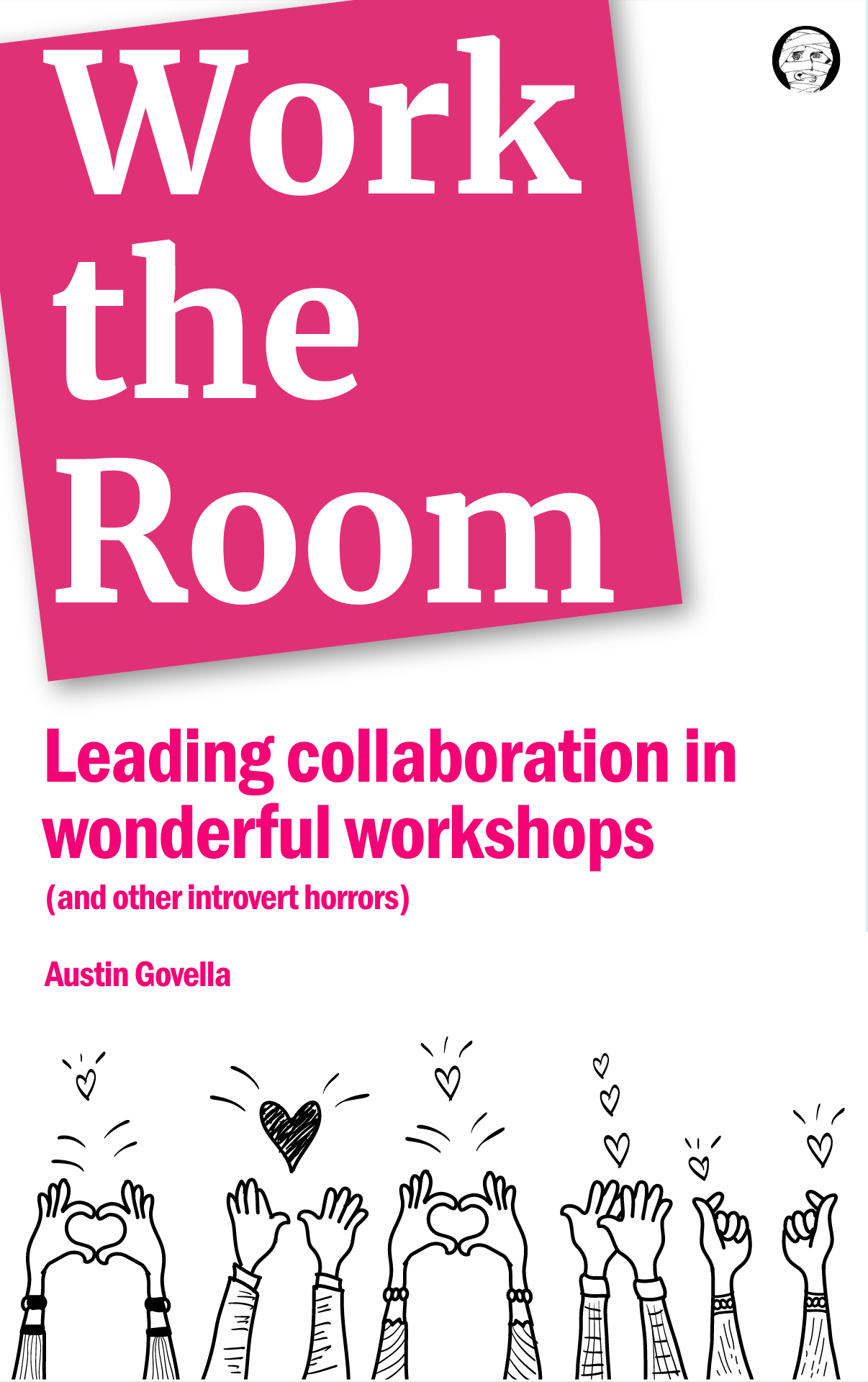
Work the Room
15 years of tips, techniques, and strategies for helping leaders decide together.
Insights and analysis
Austin writes and speaks on workshop facilitation, information architecture, and UX strategy.
Latest insight:

Austin Govella helps brand, marketing and digital commerce leaders get their brands chosen by AI agents and by people.
For over 25 years, he has worked on how organizations structure information and make decisions together, for clients including ExxonMobil, The World Bank, Harley-Davidson, and Walmart. As Director of Strategy and Design at Altudo, he leads work on AI-ready brands and personalization.
He is the author of three books on information architecture, collaboration and facilitation.
Learn more about Austin »
To evaluate an information architecture, first identify at what scale it operates. Information architecture generally applies to one of five scales: The organization, The platform, The site, The interface, or The interaction. At each scale, information architecture operates with different constraints. Each scale changes at different rates, and each scale operates within a different design context. Scale gives us a way to classify the type of information architecture, so we know what we can compare.